The Urban Grid vs. the Suburbs
Is it realistic to live in San Diego without a car? The answer is: it depends! If you live in the right zip code, ditching the keys can save you money and parking headaches without slowing you down. But if you live in a more suburban area or rely on cross-town freeways for work and play, keeping a vehicle is the most practical choice.
- The Baseline: San Diego is still a car-centric city, with 94.2% of local households owning at least one vehicle. Outside of specific transit corridors, a 20-minute drive can easily turn into a 75-minute multi-bus trek. If you live in suburban pockets, or if your weekends require hauling surfboards to the beach, you need a car.
- The Urban Pivot: But look closer at San Diego’s dense, walkable neighborhoods, and a different trend emerges. In transit-connected urban hubs like Hillcrest and Little Italy, nearly 1 in 5 households choose to live completely car-free.
- The Hybrid Shift: You don't need to own a car to have access to one. A combination of e-bikes, San Diego's efficient bus/ trolley system, ridesharing (Uber/Lyft), and short-term services (Turo or Zipcar), are helping urban renters adopt a car-lite approach.
How Many San Diegans Own a Car?
According to the U.S. Census Bureau’s American Community Survey (ACS) Table DP04 (which tracks housing characteristics), the citywide data shows that 6.6% of households in the City of San Diego do not own a vehicle.
If you look at the county-wide profile compiled by the County of San Diego Health and Human Services Agency (Demographic Profiles), the rate fluctuates slightly between 5.5% and 6.6% depending on whether you measure the broad county or the city core. That translates to roughly 93.4% to 94.5% of local households owning at least one vehicle.
The data for renters in dense urban core areas like Uptown/Hillcrest is detailed further in the City of San Diego's Mid-City Mobility Atlas. In these specific transit-rich, walkable corridors, the share of car-free households jumps up to 15-20%, with an even higher percentage scaling down to just a single vehicle to split between couples.
Which Neighborhoods are Best for Car-Free or Car-Lite?
HILLCREST
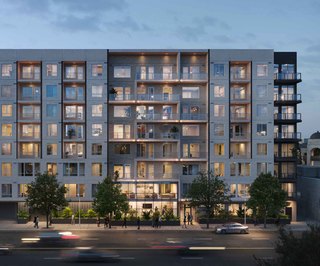
- Overview: Situated right on the northern edge of Balboa Park, Hillcrest is a lively, dense hub known for its diverse culinary scene, vibrant nightlife, and exceptional grocery access. While the broader neighborhood is highly walkable, choosing a building in the heart of the district—like Denizen—places daily staples like Whole Foods, Trader Joe's, and local cafes right at your doorstep.
- Walk Score: 90 neighborhood average (96 – 97 specifically at Denizen)
- Main Transit Methods: Heavily anchored by MTS Key Bus Routes (including the 3, 10, and 120 express lines providing efficient uphill/downhill connections to Downtown and the Mission Valley Trolley stations). It also boasts excellent walking access directly into Balboa Park's trail network.
NORTH PARK
- Overview: Located just northeast of Balboa Park, North Park is a flat, trendy enclave famous for its craft breweries, local coffee shops, and independent retail. The intersection of 30th Street and University Avenue acts as a self-contained ecosystem where residents rarely need to leave for daily errands.
- Walk Score: 86 – 90 (Very Walkable)
- Main Transit Methods: Primarily heavily serviced by MTS High-Frequency Bus Routes (the 2, 7, and Rapid 215 connect directly to Downtown and SDSU). It is also widely considered one of the most e-bike and scooter-friendly neighborhoods in the city.
LITTLE ITALY
- Overview: Positioned just north of Downtown along the bayfront, Little Italy is arguably the most pedestrian-friendly neighborhood in Southern California. The historic district features a European-style grid filled with public piazzas, exceptional patio dining, and an incredibly dense concentration of daily necessities.
- Walk Score: 95 – 98 (A Walker’s Paradise)
- Main Transit Methods: Direct access to the MTS Trolley (Green Line) at the County Center/Little Italy station, immediate access to the Santa Fe Depot (Amtrak, Coaster commuter rail, and Blue/Orange Trolley lines), and highly accessible downtown bus routes.
DOWNTOWN (Civic Core / East Village / Gaslamp)
- Overview: The urban center of the city. Downtown and the adjacent East Village place major sports entertainment (Petco Park), premier nightlife (Gaslamp Quarter), corporate job centers, and full-scale grocery stores all within a few flat city blocks.
- Walk Score: 90 – 98 (A Walker’s Paradise)
- Main Transit Methods: The primary hub for the entire MTS Trolley network (Blue, Orange, and Green lines all converge here). It is also the central hub for high-frequency regional bus routes and features excellent protected bike lanes.
If you want to live by the water without a car, the public transit isn't quite as robust as the other above neighborhoods, but the localized micro-mobility (bikes and walking) is phenomenal.
PACIFIC BEACH (Garnet Corridor)
- Overview: While the sprawling residential parts of "PB" require wheels, the central hub anchored by Garnet Avenue is a different story. If you live within a few blocks of Garnet, you're walking distance to major grocery stores (Trader Joe's and Vons), a massive stretch of bars and restaurants, and the beach boardwalk. It is the ultimate localized car-lite bubble.
- Walk Score: 74 neighborhood average (90 – 91 specifically along Garnet Avenue)
- Main Transit Methods: Headlined by the MTS Route 8 and 30 buses, which connect you directly to the Balboa Avenue Trolley Station. From there, the UC San Diego Blue Line Trolley offers a seamless, traffic-free commute south to Downtown or north straight into the major employment and education hubs of UTC and UCSD. The neighborhood itself relies heavily on beach cruisers, e-bikes, and scooters.
OCEAN BEACH
- Overview: "OB" functions like a self-contained, laid-back beach town trapped in a time capsule. The main strip along Newport Avenue places eclectic dining, shops, and a famous weekly farmers market all in a completely flat, walkable grid. However,** going entirely car-free is only highly viable if you both live and work within Ocean Beach**; while residents rarely need to leave the neighborhood grid for daily necessities, commuting out of the area without a vehicle can present a significant challenge.
- Walk Score: 82 – 92 (Highly Walkable / Walker's Paradise in the core)
- Main Transit Methods: Public transit is limited here. It's serviced primarily by the MTS Route 35 bus, which connects to the Old Town Transit Center hub. However, highly walkable community plus the local bike and skateboard culture makes it easy to skip the car.
The Bottom Line
Living in San Diego without a car comes down to geography. If your day-to-day requires navigating inland valleys or highway commutes, you'll need a vehicle. But if you anchor your life in a transit-rich, walkable pocket, skipping it is completely doable.
With a 97 Walk Score, communities like Denizen place grocery stores, shops, dining, and uptransit networks of Uptown right outside your front door—making a car-lite lifestyle highly practical. (Denizen does also offer secure underground parking with EV charging.)
Interested in seeing what walkable urban living looks like in Hillcrest? Contact us or schedule a tour to explore available floor plans, community amenities, and move-in specials.